
Expert physiotherapy for lower back pain, sciatica, disc herniation and spinal stenosis. We find the cause of your pain and build a clear plan to get you moving again.
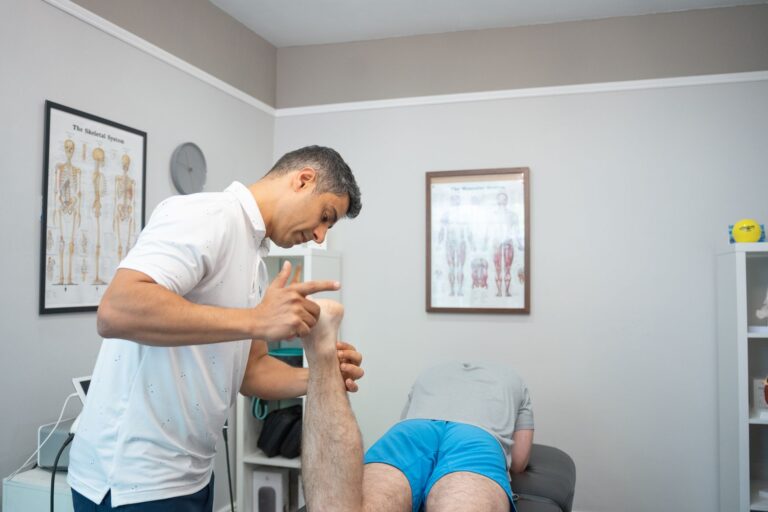
From a sudden back spasm to long-standing disc and nerve problems, we treat the full range of lower back conditions.
Slipped disc, extrusion, annular tear or fissure. Up to 70% of herniations reabsorb.
Disc bulge treatment →The two most common levels for disc herniation and sciatica.
L4-L5 and L5-S1 rehab →Pain, tingling or numbness travelling down the leg from an irritated nerve.
Sciatica treatment →Leg pain or heaviness when walking that eases when you sit or bend forward.
Spinal stenosis →A vertebra slipped forward over the one below. Most low-grade cases respond well to strengthening.
Spondylolisthesis →Sudden pain after lifting, bending or a long day sitting.
Managing low back pain →Radicular pain, numbness or weakness, including foot drop from L5 nerve compression.
Radicular pain →Back pain after deadlifts, squats or heavy lifting.
Back pain after deadlifts →Rehab before and after discectomy, decompression or fusion.
Pre and post-op rehab →Cervical disc herniation, pinched nerves, stiff necks and pain into the shoulder or arm are treated on our neck pain page.
Graded strength and mobility training, the treatment with the strongest evidence for back pain.
Rehabilitation →A non-invasive treatment that helps reduce inflammation and increases blood flow to the area.
Tecar therapy →For stubborn muscle and tendon pain around the back, buttock and hip.
Shockwave therapy →No. You can book directly with us. If you need a scan or a specialist opinion, we will refer you on.
No. Most back pain can be diagnosed without a scan. If you already have an MRI, bring the report and images and we will go through them with you.
Yes, in most cases. There is up to a 70% chance that a disc herniation or extrusion will reabsorb over time, and most people recover with the right rehab plan. Surgery is usually only needed for severe or worsening nerve problems.
An annular tear (or annular fissure) is a small crack in the outer ring of the disc. It is a common MRI finding and usually settles over several months with graded exercise that gradually builds your back’s tolerance to load.
Most disc problems improve over 12 to 20 weeks with consistent rehab. Many people feel clearly better and get back to activity well before their MRI changes.
It depends on your condition and goals. We will give you an honest estimate at your first visit, and your home exercise plan does a lot of the work between sessions.
Keep gently moving. Bed rest usually slows recovery. We will show you which movements and positions are safe for your back.
Most Irish health insurance plans let you claim back part of each physiotherapy session. Check your plan for the exact amount you can claim.
Yes. Sciatica is one of the most common problems we treat. We find out whether it is coming from a disc, stenosis or the buttock (such as piriformis syndrome) and treat the cause.
Yes. If you live outside Dublin, you can book an online consultation that includes an assessment, an MRI review and a personalised exercise plan.
Go to the emergency department straight away if you have numbness around the groin or saddle area, new bladder or bowel problems, or leg weakness or foot drop that is getting worse quickly. These can be signs of cauda equina syndrome or severe nerve compression.
An online consultation includes an assessment, an MRI review and a personalised exercise plan, wherever you live.
Book an online consultationDublin Sports Injury Clinic
56 Fitzwilliam Square North
Dublin 2, D02 X224
Opening hours
Monday to Friday, 8am to 7pm
Book your back pain assessment at our Dublin 2 clinic today.
Book nowGeneral information only; it does not replace an individual assessment.