
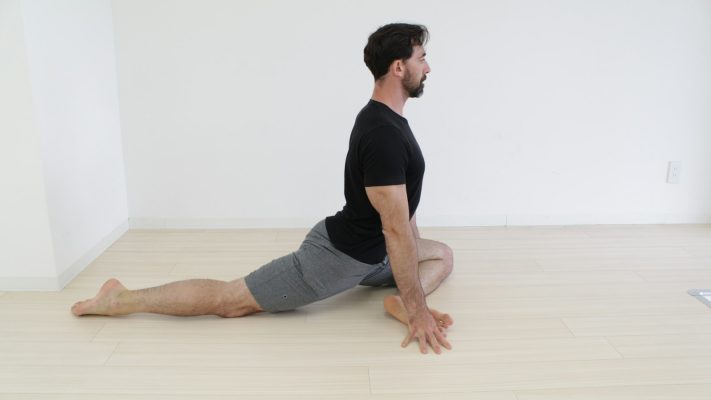
Deep pain in the buttock that gets worse when you sit, and sometimes travels down the back of your leg, can come from piriformis syndrome. The piriformis is a small muscle deep in the buttock, and the sciatic nerve runs right next to it. When the area becomes irritated, it can feel a lot like sciatica from the back. Getting the right diagnosis matters, because the treatment is different.
Need help? Read about our sciatica treatment in Dublin, or book an appointment in Dublin 2 or online.
| What it is | Irritation of the sciatic nerve as it passes the piriformis muscle deep in the buttock |
|---|---|
| Who gets it | People who sit for long periods, runners, cyclists, and people after a fall onto the buttock |
| Key symptoms | Deep buttock pain, worse with sitting, sometimes with pain or tingling down the back of the leg |
| Main treatment | Reducing pressure on the buttock, hip strengthening, gentle stretching and nerve gliding |
| Typical improvement | Most people improve within 12 to 20 weeks of consistent exercise |
What causes piriformis syndrome?
The sciatic nerve passes under, and sometimes through, the piriformis muscle. If the muscle or the tissues around it become irritated or tight, the nerve can be squeezed or sensitised. Common triggers include:
- Sitting for long hours, especially on hard seats or with a wallet in your back pocket
- A sudden increase in running, cycling or hill training
- Weak hip and glute muscles
- A fall or direct blow to the buttock
Piriformis syndrome is part of a wider group of problems called deep gluteal syndrome, where the sciatic nerve is irritated in the buttock rather than in the spine.
Symptoms
- Deep pain in one buttock
- Pain that gets worse when sitting for a while
- Tenderness deep in the buttock, near the bottom of the hip
- Pain, tingling or numbness travelling down the back of the thigh
- Pain when you cross your leg over or turn it inwards
Piriformis syndrome or sciatica from the back?
The two can feel very similar. Sciatica from the lower back, usually from a disc herniation at L4-L5 or L5-S1, is much more common. Clues that the problem is coming from your back include low back pain, pain that spreads below the knee into the foot, and pain that changes with bending or coughing. Clues for piriformis syndrome include pain mainly in the buttock, pain with sitting, and tenderness deep in the buttock with a normal back examination.
Because piriformis syndrome is diagnosed by ruling out other causes, a proper assessment is important. Read more about sciatica and back pain.
Treatment
- Reduce pressure on the buttock: take regular breaks from sitting, use a cushion, and remove your wallet from your back pocket
- Hip and glute strengthening: exercises such as bridges, side-lying leg raises and clams, progressed over time
- Gentle stretching: figure-4 and knee-to-opposite-shoulder stretches, held comfortably without forcing
- Nerve gliding: gentle movements that help the sciatic nerve slide more freely
- Tecar therapy: a non-invasive treatment that helps reduce inflammation around the irritated nerve and increases blood flow to the deep buttock muscles, which can ease pain and speed up recovery. Learn more about Tecar therapy at our Dublin 2 clinic.
- Hands-on treatment: soft tissue work and shockwave can help settle the area
- Injections: occasionally used when exercise has not worked; surgery is rarely needed
What you can do at home
- Get up and move every 30 to 45 minutes when sitting
- Do a gentle figure-4 stretch: lying on your back, cross the sore leg over the other knee and pull gently, holding for 20 to 30 seconds
- Strengthen with bridges and side-lying leg raises, 2 to 3 sets of 10 to 15
- Avoid stretching hard into sharp or burning nerve pain
- Use heat on the buttock to ease muscle tension
Outlook
Most people with piriformis syndrome improve with the right exercises and changes to sitting habits, usually within 12 to 20 weeks. If pain keeps coming back, it is worth checking that the problem is not coming from the lower back.
Frequently asked questions
Is piriformis syndrome the same as sciatica?
Not exactly. Sciatica describes pain along the sciatic nerve. Most sciatica comes from the lower back, while piriformis syndrome irritates the same nerve in the buttock.
Why does it hurt more when I sit?
Sitting puts direct pressure on the piriformis and the sciatic nerve underneath it. Hard seats and long periods of sitting make it worse.
Should I stretch the piriformis every day?
Gentle stretching can help, but strong or painful stretching can irritate the nerve. Combining gentle stretches with hip strengthening works better than stretching alone.
Can I keep running with piriformis syndrome?
Often, yes, at a lower volume. Avoid hills and speed work for a few weeks, and build back up as the pain settles.
When should I see a doctor?
See a doctor urgently if you have numbness around the groin, changes in bladder or bowel control, or leg weakness that is getting worse. These are not caused by piriformis syndrome and need urgent assessment.
Videos that will help
Related conditions
Related articles
Sciatica Pain Relief in Dublin Sciatica Causes, Symptoms, and Treatment In Dubl Sacroiliac Joint Pain
Get expert help
Not improving, or not sure if the pain is coming from your back or your buttock? Book an assessment at our Dublin 2 clinic or online from anywhere.
General information only; it does not replace an individual assessment.
Not in Dublin? Recover with Bob online.
Follow Bob’s step-by-step rehab plans in the Bob the Physio app, or work with him 1:1 on a flexible monthly online programme. See real recovery stories from 1,000+ people.
References
- Hopayian K, Danielyan A. Four symptoms define the piriformis syndrome: an updated systematic review of its clinical features. Eur J Orthop Surg Traumatol. 2018;28(2):155-164.
- Hicks BL, Lam JC, Varacallo M. Piriformis Syndrome. StatPearls. Treasure Island (FL): StatPearls Publishing.