Sciatica Treatment in Dublin 2
Is pain travelling from your back or buttock into your leg? Is it affecting your sleep, work, walking or ability to exercise?
At
Dublin Sports Injury Clinic, we provide individual assessment, treatment and rehabilitation for people experiencing sciatica. Our approach goes beyond pain relief: we help you understand your symptoms and build towards a confident return to everyday life.
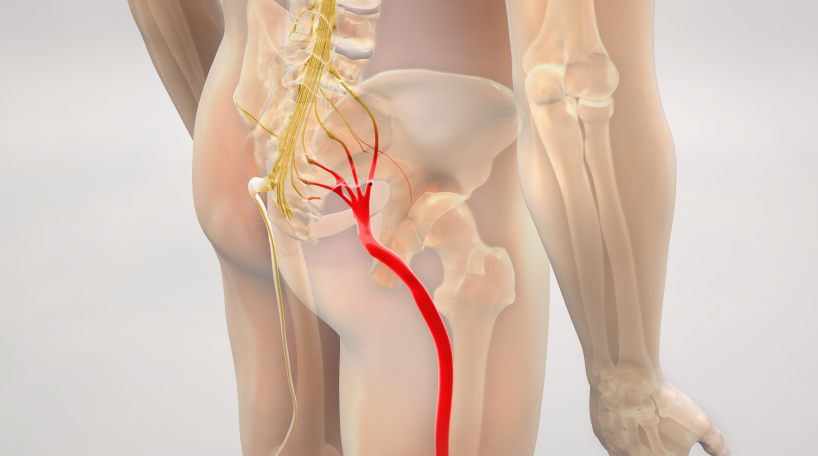
What is sciatica?
Sciatica describes symptoms caused by irritation or compression of nerves supplying the leg. You may experience pain through the buttock and leg, tingling, numbness or weakness.
A lumbar disc herniation or narrowing around the nerves can contribute to these symptoms. An assessment helps us understand what may be affecting you and whether physiotherapy or further medical review is appropriate.
Who can we help?
Our sciatica assessment and rehabilitation service is suitable for people experiencing:
- Pain travelling from the lower back or buttock into the leg.
- Tingling or numbness in the leg or foot.
- Sciatica associated with a lumbar disc bulge or herniation.
- Difficulty sitting, walking, sleeping or working.
- Recurring symptoms or difficulty returning to exercise.
Whether your symptoms are recent or have persisted for months, we start by understanding your individual situation.
What happens at your initial consultation?
Review your history and symptoms
We discuss when your symptoms started, what makes them better or worse, previous treatments and your medical history. We also explore your daily routine, sleep, activity and recovery goals.
If you have an MRI report, we review it alongside your symptoms and examination. Your scan is part of the picture—it does not tell us everything about your pain or recovery.
Assess your movement and strength
We assess relevant movement, strength and nerve function, as well as the activities you find difficult. This helps us identify a suitable starting point and recognise when further investigation may be needed.
Provide treatment to help reduce pain
Your initial appointment includes treatment aimed at easing your symptoms, selected according to your assessment. We also explain how to adjust everyday activities and manage movements that currently aggravate your pain.
Explain your likely recovery time
We discuss a realistic estimate of how long recovery may take, based on your symptoms, examination and current limitations. Recovery varies, so we review this estimate as your progress becomes clearer.
Map out your recovery journey
You leave with an explanation of our findings and a clear roadmap for your next steps: managing symptoms, improving movement, rebuilding strength and gradually returning to your usual activities.
Our approach: beyond pain relief
Pain relief matters, but it is only one part of recovery. We also want to help you sit more comfortably, walk farther, work with confidence and return to the activities you enjoy.
Your rehabilitation progresses according to your needs and response.
Find a manageable starting point
We help you identify movements and activities you can tolerate. This may involve modifying your routine, breaking up prolonged sitting and adjusting exercise intensity.
Rebuild movement and strength
As your tolerance improves, we gradually develop your strength and capacity. Your exercises are selected and progressed around your assessment, goals and symptom response.
Return to everyday activities
We work towards the tasks that matter to you—from walking and working to bending, lifting, running or returning to the gym.
We also consider sleep, stress and daily habits that may affect your recovery. The aim is to build confidence and independence, with clear guidance throughout the process.
Your MRI is only part of the story
An MRI can provide useful information about your spine, but treatment decisions also depend on your symptoms, strength, nerve function and daily limitations.
At Dublin Sports Injury Clinic, we assess the person alongside the scan. Your rehabilitation is guided by what you can currently do, what you want to return to and how you progress.
Meet Bob Firouzi — Bob The Physio
Bob is a physiotherapist with
15 years of international experience treating back and neck pain.
His qualifications include a B.Sc. in Physical Therapy, an MSc in Sports Psychology and a B.Sc. in Physical Education and Sports Science.
His holistic approach combines assessment, treatment, education and progressive rehabilitation to help people build strength and confidence in their recovery.
Frequently asked questions
Do I need an MRI before booking?
No. You can book an assessment without an MRI. If further investigation or medical review is appropriate, we will discuss this with you.
Should I stop exercising?
Usually, complete rest is not necessary. Staying active within your tolerance is generally encouraged, but some activities may need to be adjusted. We help you find an appropriate level rather than push through worsening symptoms.
How long does sciatica take to improve?
There is no single recovery timeline. Symptoms may improve over weeks or months, while some people need longer. At your initial consultation, we discuss a realistic estimate and the milestones we will use to monitor your progress.
Can you help me return to the gym?
Yes. Returning to strength training can be a rehabilitation goal. We help you gradually rebuild tolerance to exercise, bending and lifting, with progression based on your assessment and response.
Do you offer online consultations?
Yes. If you cannot attend our Dublin clinic, an online consultation allows us to review your history, symptoms and relevant reports, discuss your recovery and advise on suitable next steps.
When to seek urgent medical help
Seek emergency medical assessment if you develop new difficulty passing urine, loss of bladder or bowel control, numbness around your genitals or bottom, or severe or worsening weakness in both legs.
New or increasing leg weakness also needs prompt medical assessment.
Book your sciatica assessment in Dublin 2
If sciatica is limiting your daily life, let’s work out where you are now and how to move forward.
At
Dublin Sports Injury Clinic in Dublin 2, your initial consultation includes a history review, physical assessment, treatment aimed at reducing pain, and a clear discussion of your recovery timeline and next steps.
Book your initial consultation

One Response
Thank you for sharing this, really find them helpful. I’m doing this routine 2times a day, and it helped a lot. Appreciate your help.