
Physiotherapy before and after ACL surgery, or as an alternative to surgery when it suits you. A clear, stage-by-stage plan to get you back to sport with confidence.
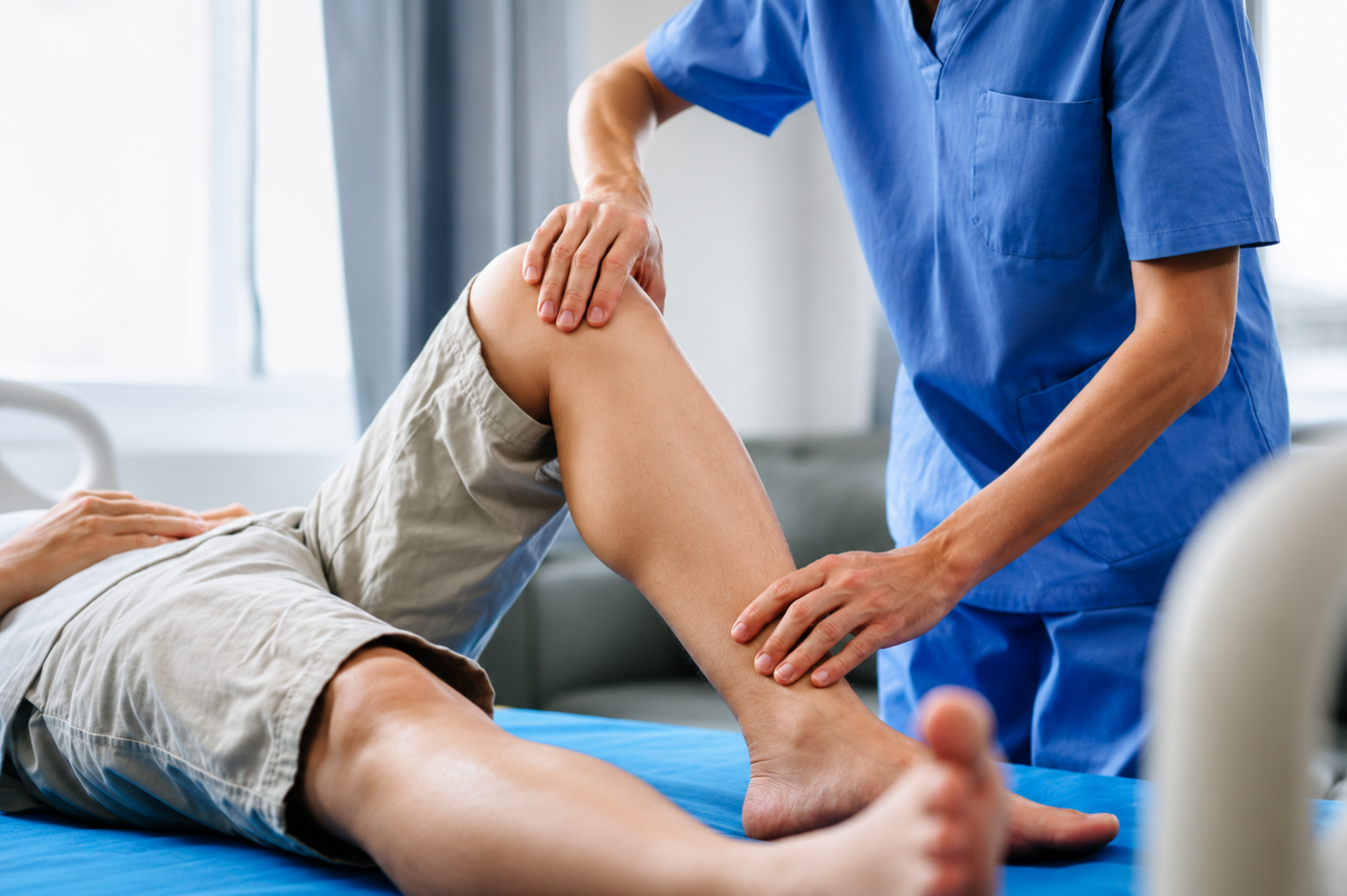
Wherever you are in your recovery, we can help you take the next step.
Every knee is different, so we progress you by milestones rather than dates alone, always alongside your surgeon’s protocol.
We settle the swelling, restore full knee range of movement and build quadriceps strength. Research shows that quadriceps strength before surgery predicts knee function up to two years afterwards (Eitzen et al., 2009).
We manage pain and swelling, get your knee extension back to full range and start early quadriceps strengthening. Clinical guidelines recommend regaining full extension and quadriceps strength early, as both support a better long-term outcome (van Melick et al., 2016).
Progressive strength training for the quads, hamstrings, glutes and calves, plus balance and control work.
Return to running, then jumping, landing and changing direction, step by step as your knee is ready.
Sport-specific training and strength and hop testing before full training and matches. For pivoting sports this usually means at least 9 months after surgery.
Some people do well with structured rehab alone. We will help you weigh up the options with your surgeon.
A clear plan from your very first appointment.
Sessions are €90 (30 minutes). Tech employees with Perks at Work get 22% off.
The most important part of ACL rehab: building the strength your knee needs for daily life and sport.
To ease pain and stiffness and help you get your movement back early on.
Gentle deep heat that can help ease pain and stiffness alongside your exercises.
About Tecar therapySupervised strength sessions in a small group once you are further along.
Semi-private trainingRated 5.0 on Google by more than 330 patients.
Most people need 9 to 12 months after ACL reconstruction before returning to pivoting sports such as football, GAA, rugby or basketball. Research shows that waiting until at least 9 months, and passing strength and hop tests before going back, lowers the risk of injuring the knee again.
Yes, if you can. Getting the swelling down, being able to fully straighten the knee and building good thigh strength before surgery is linked to a better recovery afterwards.
Not always. Some people, especially those who are not going back to pivoting sports, do well with structured rehab alone. It is a decision for you and your surgeon, and we can help you understand the options.
Usually somewhere around 3 to 4 months after surgery, once your knee moves fully, the swelling has settled and your leg is strong enough. We check this with you and follow your surgeon’s guidance.
No. You can book directly with us. If you need a scan or a surgical opinion, we will refer you on.
Most Irish health insurance plans let you claim back part of each physiotherapy session. Check your plan for the exact amount.
After surgery, contact your surgeon or go to the emergency department if your knee becomes hot, red and increasingly swollen, if you have a fever, or if you get pain and swelling in your calf. These can be signs of infection or a blood clot.
Book an assessment at our clinic on Fitzwilliam Square, Dublin 2, or online if you live further away.
Related: Pre and post-operative rehab · Knee pain · Running injury clinic · Sports injury rehab


