
Sudden pain in the calf while running, often described as a “pull”, a sharp twinge or a feeling of being kicked in the back of the leg, is most often a calf strain (a tear in the calf muscle). Calf strains are very common in runners, especially as we get older, and most heal well with a gradual, strength-based plan.
Need help? Read about our running injury clinic in Dublin, or book an appointment in Dublin 2 or online.
| Where it hurts | Back of the lower leg, in the calf muscle |
|---|---|
| Typical start | Sudden pain or a “pull” during a run or sprint |
| Often called | Calf strain or calf muscle tear |
| Common in | Runners (especially over 35), football, tennis and racket sports |
| Usual recovery | 1–3 weeks (mild) to 6 weeks or more (severe) |
What causes it?
The calf is made up of two main muscles: the gastrocnemius (the larger muscle you can see) and the soleus (which sits deeper and does a lot of work in running). A strain happens when muscle fibres are overloaded and tear, usually when the muscle is working hard while being stretched, such as pushing off, accelerating or running uphill.
Things that raise the risk include:
- A previous calf strain
- Being an older runner
- A sudden increase in distance, speed or hill work
- Fatigue late in a long run or race
- Weak calf muscles that cannot cope with repeated load
Symptoms
- Sudden pain in the calf, sometimes with a pop or pulling sensation
- Pain when pushing off, walking fast or going up on your toes
- Tenderness at one spot in the muscle
- Swelling and sometimes bruising a day or two later
- Tightness when you stretch the calf
Seek urgent medical care if: your calf is swollen, warm, red or tender without a clear injury (especially after a long flight, surgery or a period of immobility, as this can be a blood clot), you have chest pain or shortness of breath, you felt a sudden snap at the back of the heel and cannot push up on your toes (possible Achilles tendon rupture), or you cannot put weight on the leg.
How is it diagnosed?
A calf strain is usually diagnosed from how it happened and a physical examination. Your physiotherapist will check where it is tender, test calf strength and calf raises, and rule out other causes such as an Achilles problem or pain referred from the back. An ultrasound or MRI is occasionally used for severe injuries or in athletes when timing a return to sport.
Treatment
- Protect it early. For the first few days, avoid activities that make it worse and use pain as a guide. Walking normally is usually encouraged as soon as it is comfortable.
- Early, gradual loading. Starting gentle strengthening early, within comfort, helps the muscle heal and regain strength.
- Progressive strength work. Moving from double-leg to single-leg calf raises, bent-knee calf raises for the soleus, and then faster, springier exercises.
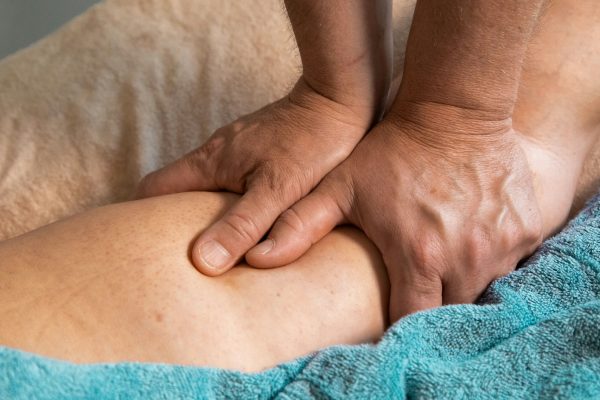
- Hands-on treatment. Soft tissue treatment and therapies such as Tecar can help ease pain and stiffness alongside exercise.
- A gradual return-to-run plan. Usually starting with walk-run intervals on flat ground, then adding distance, hills and speed in steps.
What you can do at home
- Rest from running, but keep walking if it is comfortable
- Use a cold pack for comfort in the first couple of days if it helps
- Begin gentle calf raises once walking is comfortable, and build up slowly
- Keep fit with cycling or swimming if they are pain-free
- Do not return to running until you can do repeated single-leg calf raises and hop without pain
Outlook
Most calf strains heal well. The biggest risk is going back too soon, as calf injuries are known for coming back. Rebuilding full calf strength and returning to running gradually gives you the best chance of staying injury-free.
Frequently asked questions
Can I run with a pulled calf?
Not straight away. Running on a fresh calf strain often makes it worse and is a common reason calf injuries come back. Walk normally and get pain-free calf raises first, then return with short, easy runs.
How long does a calf strain take to heal?
A mild strain often settles in 1 to 3 weeks, a moderate strain in about 3 to 6 weeks, and a more severe tear can take longer. Your strength and how your calf copes with hopping and running matter more than the date on the calendar.
Should I stretch a pulled calf?
Gentle movement within comfort is fine, but avoid hard stretching in the first few days. Strength exercises such as calf raises do more to help it heal and stop it coming back.
Why does my calf keep getting injured?
Calf strains often return when people go back to running before the calf is strong enough, or ramp up distance and speed too quickly. Older runners and those with a previous calf injury are at higher risk, so a gradual, strength-based return matters.
Related conditions
Running injuries Achilles tendinopathy Shin splints Hamstring injury
Related articles
The healing stages of soft tissue Managing an acute injury Overuse injuries in runners
Get expert help
Not improving, or want a plan built around your goals? Book an assessment at our Dublin 2 clinic or online from anywhere.
General information only; it does not replace an individual assessment.
References
- Green B, Pizzari T. Calf muscle strain injuries in sport: a systematic review of risk factors for injury. Br J Sports Med. 2017;51(16):1189-1194.
- Bayer ML, Hoegberget-Kalisz M, Jensen MH, et al. Role of tissue perfusion, muscle strength recovery, and pain in rehabilitation after acute muscle strain injury: a randomized controlled trial comparing early and delayed rehabilitation. Scand J Med Sci Sports. 2018;28(12):2579-2591.
- Dubois B, Esculier JF. Soft-tissue injuries simply need PEACE and LOVE. Br J Sports Med. 2020;54(2):72-73.