
Achilles Tendinopathy Treatment in Dublin: Pain, Rehab & Recovery
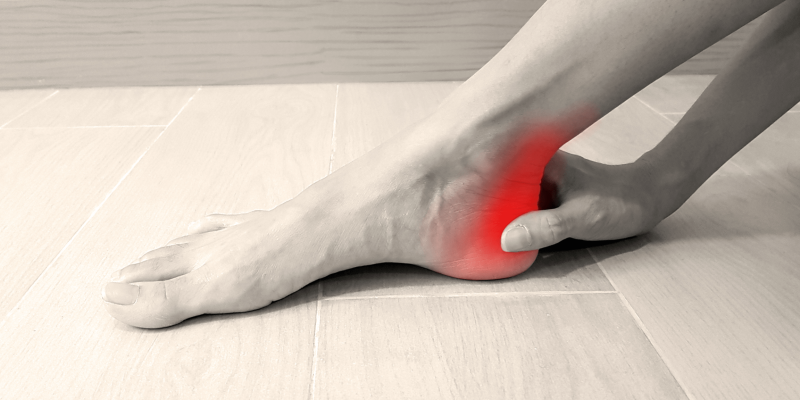
Achilles tendon pain can make running, climbing stairs or taking your first steps in the morning uncomfortable. You may notice stiffness behind your heel, tenderness around the tendon or pain that returns after exercise.
Need help? Read about our Achilles tendinopathy treatment in Dublin, or book an appointment in person or online.
| Two types | Mid-portion (2 to 6 cm above the heel) and insertional (where it attaches to the heel bone) |
|---|---|
| Key symptoms | Morning stiffness, pain at the start of activity, a thickened tender tendon |
| Main treatment | Progressive loading: isometrics, heavy slow resistance, then hopping and running |
| Typical recovery | About 12 weeks of consistent loading; longer for long-standing cases |
| Avoid | Complete rest, and strong calf stretches off a step for insertional pain |
At Dublin Sports Injury Clinic in Dublin 2, we assess Achilles pain and provide personalised rehabilitation to help you manage symptoms, rebuild strength and return to the activities you enjoy.
Your recovery starts with understanding your symptoms and choosing the right level of activity and exercise.
Book your Achilles tendon assessment
What is Achilles tendinopathy?
Your Achilles tendon connects your calf muscles to your heel bone. It helps you push off when walking, running and jumping.
Achilles tendinopathy describes persistent tendon pain and reduced function associated with loading. You may also hear it called Achilles tendinitis or Achilles tendinosis.
There are two main locations:
-
Midportion Achilles tendinopathy: pain above the heel, along the main body of the tendon.
-
Insertional Achilles tendinopathy: pain where the tendon attaches to the heel bone.
Identifying the location matters because the most suitable exercise range can differ.
What are the common symptoms?
Symptoms may include:
-
Stiffness when getting out of bed or after sitting.
-
Pain behind the heel during walking or running.
-
Discomfort with stairs, hills or jumping.
-
Tenderness or thickening around the tendon.
-
Pain that eases as you warm up but returns afterwards.
An assessment helps establish whether your pain comes from the Achilles tendon or another structure around the heel.
Why does Achilles pain develop?
A change in activity can place more demand on the tendon than it currently tolerates. This might follow an increase in running distance, speed sessions, hill training or a return to sport after a break.
Your assessment considers your training history, daily activity, calf capacity and relevant health factors. There may be several contributing factors rather than one single cause.
Achilles tendinopathy treatment: what helps?
1. Adjust the activities that aggravate symptoms
Rehabilitation usually involves modifying painful activities while maintaining tolerable movement.
Depending on your symptoms, this could mean temporarily reducing hills, sprinting or jumping, adjusting your running sessions, or choosing another form of exercise.
We help you find an activity level you can manage and build from there.
2. Progressively strengthen the calf and tendon
Progressive tendon loading is central to Achilles rehabilitation. Your programme may include supported calf raises, seated calf raises, single-leg exercises and resistance training.
Eccentric exercises—where the muscle works while lengthening—are one option. They are part of a wider range of strengthening approaches, rather than the only effective method.
Exercise selection, resistance and progression should reflect your current ability and response. [1]
3. Adapt exercises for insertional Achilles pain
If your pain is directly at the heel attachment, lowering your heel deeply below a step can increase compression around the painful area.
Starting calf exercises on a flat surface and limiting deep ankle bending may be more suitable. A 2025 clinical trial found better outcomes with rehabilitation that reduced tendon compression in physically active people with insertional Achilles tendinopathy. [2]
4. Review progress and rebuild activity
As your capacity improves, rehabilitation can progress towards the demands of your goals—whether that means comfortable walking, gym training or returning to running.
Progression should reflect how you perform and recover from activity, rather than a fixed calendar alone.
Our sports injury rehabilitation service supports a structured return to exercise and sport.
Can shockwave therapy help Achilles tendinopathy?
Shockwave therapy in Dublin is available at Dublin Sports Injury Clinic and may be considered for selected patients with persistent Achilles tendon symptoms.
We discuss whether it is appropriate following an assessment. It is an additional option alongside rehabilitation, and its extra benefit is uncertain. It does not replace progressive strengthening and activity management. [3]
Learn more about our shockwave therapy service.
What happens at your first appointment?
We review your symptoms, medical history, activity levels and previous treatment, then assess the movements and physical demands relevant to your problem.
Your consultation includes an explanation of the findings, appropriate treatment to help manage symptoms, and a discussion of your likely recovery pathway.
We map out a personalised rehabilitation plan and explain how to progress it.
Seek urgent care if: you felt a sudden snap or a kick to the back of the ankle, cannot rise onto your toes, or can feel a gap in the tendon. A rupture needs urgent assessment.
Frequently asked questions
How long does Achilles tendinopathy take to improve?
Expect rehabilitation to take time. Guidelines recommend an initial period of at least 12 weeks of education, activity management and calf strengthening. Recovery may take longer, particularly when symptoms have been present for some time. [3]
Do I need an MRI or ultrasound?
Not everyone needs a scan. Achilles tendinopathy can often be diagnosed through your history and examination. Imaging may be considered when the diagnosis is unclear or symptoms follow an unexpected course. [3]
Should I stretch a painful Achilles tendon?
Stretching is not automatically suitable for everyone. Deep calf stretching can aggravate insertional symptoms, so advice should reflect where your pain is located. [2]
When should I seek urgent assessment?
A sudden snap or pop, particularly with difficulty pushing off or standing on tiptoe, needs urgent medical assessment to check for an Achilles tendon rupture.
Book Achilles rehabilitation in Dublin 2
If Achilles pain is affecting your walking, running or exercise, we can help you understand the problem and plan your next steps.
Book an assessment at Dublin Sports Injury Clinic for personalised advice, treatment and a structured rehabilitation plan.
This article provides general education and does not replace an individual assessment.
References
-
Chimenti RL et al. (2024). Achilles Pain, Stiffness, and Muscle Power Deficits: Midportion Achilles Tendinopathy—Revision 2024. Journal of Orthopaedic & Sports Physical Therapy.
-
Pringels L et al. (2025). Effectiveness of reducing tendon compression in the rehabilitation of insertional Achilles tendinopathy: a randomised clinical trial. British Journal of Sports Medicine.
-
de Vos RJ et al. (2021). Dutch multidisciplinary guideline on Achilles tendinopathy. British Journal of Sports Medicine.
Need help with this? Talk to a physiotherapist.
Get a proper assessment and a personalised recovery plan at Dublin Sports Injury Clinic, 56 Fitzwilliam Square, Dublin 2, or book an online consultation from anywhere. Learn more about our Achilles tendinopathy treatment in Dublin.
One Response
Thank you for this routine, plantar fasciitis is challenging, but I found this routine really helpful. Thank you