
Sharp pain under your heel when you take your first steps in the morning, or when you stand up after sitting, is most often caused by plantar fasciitis (also called plantar heel pain). It is one of the most common foot problems we see, in runners, walkers and people who stand all day, and the good news is that it usually gets better with the right exercises and a few simple changes.
Need help? Read about our plantar fasciitis treatment in Dublin, or book an appointment in Dublin 2 or online.
| What it is | Irritation of the thick band of tissue (the plantar fascia) that runs from your heel to your toes |
|---|---|
| Who gets it | Runners, walkers, people who stand for long periods, and adults aged 40 to 60 |
| Key symptoms | Sharp heel pain with the first steps in the morning or after sitting, easing as you warm up |
| Main treatment | Calf and plantar fascia stretches, progressive strength training, supportive footwear, and shockwave for stubborn cases |
| Typical improvement | Most people improve within 3 to 6 months; long-standing cases can take longer |
What causes heel pain?
The plantar fascia supports the arch of your foot every time you walk, run or stand. When the load on it rises faster than it can adapt, it becomes irritated where it attaches to the heel bone. Common triggers include:
- A sudden increase in walking, running or standing
- Long hours on hard floors, especially in flat or worn-out shoes
- Tight calf muscles or a stiff ankle
- Weight gain, which increases the load on the foot
- Running on hills or changing to a new type of shoe
Other causes of heel pain include Achilles tendinopathy (pain at the back of the heel), a heel bone stress fracture, and nerve irritation. If your pain does not fit the typical pattern, it is worth getting it checked.
Symptoms
- Sharp or stabbing pain under the heel, often towards the inner side
- Pain worst with the first steps in the morning or after sitting
- Pain that eases after a few minutes of walking, then returns after long periods on your feet
- Tenderness when you press under the heel
How is it diagnosed?
A physiotherapist can usually diagnose plantar fasciitis from your history and a short examination of your foot and ankle. Scans are rarely needed at the start. An X-ray or ultrasound may be useful if the pain is unusual, very severe, or not improving after a few months of good treatment.
Treatment
The latest clinical guidelines for heel pain recommend a combination of:
- Education and load management: reducing the activities that flare it up for a while, without stopping completely
- Stretching: calf stretches and plantar fascia-specific stretches, especially first thing in the morning
- Strength training: slow, heavy calf raises with the toes lifted on a towel have been shown to speed up recovery
- Footwear and taping: supportive shoes, heel cups or taping to reduce the load in the short term
- Night splints: helpful for some people with severe morning pain
- Shockwave therapy: a good option for heel pain that has lasted more than a few months. Learn more about shockwave therapy at our Dublin 2 clinic.
Steroid injections can give short-term relief, but they do not fix the problem and carry a small risk of weakening the fascia, so we usually try exercise and shockwave first.
What you can do at home
- Before getting out of bed, pull your toes back towards your shin for 10 to 15 seconds, three times
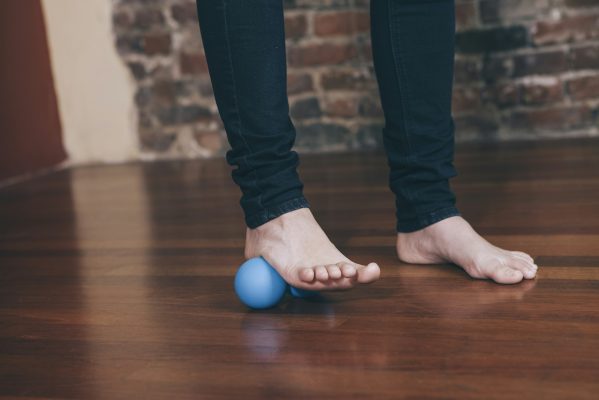
- Roll the sole of your foot over a ball or a cold bottle for 2 to 3 minutes
- Do calf stretches against a wall, with the knee straight and bent, holding for 30 seconds
- Avoid walking barefoot on hard floors while it is sore
- Reduce long walks or runs for a few weeks, then build back up gradually
Outlook
Plantar fasciitis can be frustrating, but most people recover fully. With a structured plan, the majority improve within 3 to 6 months. Pain that has been there for a long time can take longer, which is when shockwave therapy and a progressive strength programme make the biggest difference.
Frequently asked questions
Why is heel pain worse in the morning?
Overnight the plantar fascia tightens up. The first steps stretch it suddenly, which causes the sharp pain. It usually eases as the tissue warms up.
Should I keep walking with plantar fasciitis?
Yes, but within your limits. Keep walking for daily life, and reduce long walks, runs or standing for a few weeks. Build back up gradually as the pain settles.
Do I need special insoles?
Not always. Supportive shoes and a heel cup help many people in the short term. Custom insoles can help some people, but they work best alongside exercise.
Does shockwave therapy work for plantar fasciitis?
Yes. Shockwave therapy is recommended in clinical guidelines for heel pain, especially when it has lasted more than three months. It is usually given once a week for 6 to 8 sessions.
Is a heel spur the cause of my pain?
Usually not. Heel spurs are common on X-rays, even in people without pain. Treatment focuses on the plantar fascia, not the spur.
Videos that will help
Related conditions
Related articles
Best exercise routine to manage plantar fasciiti Achilles Tendinopathy Treatment in Dublin Running Injury Treatment in Dublin
Get expert help
Not improving, or want a plan built around your goals? Book an assessment at our Dublin 2 clinic or online from anywhere.
General information only; it does not replace an individual assessment.
References
- Koc TA Jr, et al. Heel Pain – Plantar Fasciitis: Revision 2023. Clinical Practice Guidelines. J Orthop Sports Phys Ther. 2023;53(12):CPG1-CPG39.
- Rathleff MS, et al. High-load strength training improves outcome in patients with plantar fasciitis: a randomized controlled trial with 12 months follow-up. Scand J Med Sci Sports. 2015;25(3):e292-e300.