
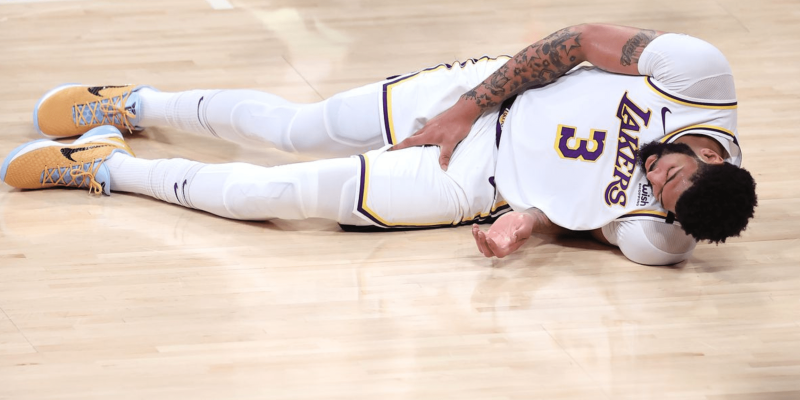
Pain in your groin or inner thigh when running, kicking or changing direction? A groin injury can interrupt sport, gym training and everyday activities.
Need help? Read about our groin injury treatment in Dublin, or book an appointment in person or online.
| What it is | A strain of the adductor (inner thigh) muscles |
|---|---|
| Common in | Football, GAA, hockey, skating and change-of-direction sports |
| Key symptoms | Inner thigh pain with kicking, sprinting, cutting or squeezing the knees |
| Main treatment | Progressive adductor strengthening (incl. Copenhagen exercises), return-to-running plan |
| Return to sport | 1 to 3 weeks (grade 1), 4 to 8 weeks (grade 2), longer for grade 3 |
At Dublin Sports Injury Clinic in Dublin 2, we provide detailed assessments, appropriate treatment and personalised rehabilitation for groin pain and adductor injuries.
Whether your pain started suddenly or has developed gradually, we help you understand your symptoms and map out your next steps.
Book your groin injury assessment
What is a groin strain?
A groin strain commonly involves injury to the adductor muscles or their associated tendon structures on the inside of the thigh.
These muscles help bring your legs together and contribute to movements such as running, kicking and changing direction.
An injury may occur during a sudden movement or develop alongside repeated sporting demands.
Is all groin pain a muscle strain?
No. Groin pain can arise from the adductors, hip flexors, inguinal region, pubic region or hip joint. Other medical conditions can also cause pain in this area.
An assessment helps distinguish these possibilities and guide appropriate care.
Common symptoms of a groin strain
You may experience:
- Pain or tenderness in the groin or inner thigh.
- Discomfort when bringing your legs together.
- Pain during running, kicking or side-stepping.
- Difficulty with longer strides or changing direction.
- Bruising or swelling after a more significant injury.
Symptoms vary, and their severity alone does not establish the extent of an injury.
When should you book an assessment?
Consider an appointment if:
- Pain is affecting walking, work or exercise.
- Symptoms return whenever you restart training.
- You felt a sudden pull during sport.
- You are unsure whether stretching or strengthening is appropriate.
- Previous treatment has not helped sufficiently.
- You need guidance before returning to running or competition.
Book an assessment at Dublin Sports Injury Clinic
What happens at your first appointment?
We start by listening to your history, concerns and recovery goals.
Review how your symptoms developed
We discuss the injury, previous episodes, training demands and activities that are currently difficult.
Assess movement and strength
Your examination considers relevant hip movement, muscle strength, tenderness and functional tasks.
Explain the findings
We explain what the assessment suggests and whether further investigation or medical assessment is appropriate.
Plan your treatment and rehabilitation
Your clinic consultation includes appropriate treatment to help manage symptoms, practical activity advice and a personalised rehabilitation plan.
We discuss your likely recovery pathway and explain how progress will be reviewed.
How do we approach groin strain rehabilitation?
1. Adjust aggravating activities
We help you identify manageable changes to sport, gym training and daily tasks.
Your plan should give you clear guidance about what to do between appointments and when to seek further advice.
2. Introduce appropriate strengthening
Rehabilitation commonly involves progressive loading of the injured area alongside other relevant muscle groups.
We select your starting exercises, demonstrate the technique and explain how to adjust the challenge.
3. Rebuild running and movement demands
When appropriate, rehabilitation progresses towards running, acceleration and changes of direction.
Your programme reflects the activities you want to return to.
4. Prepare for sport-specific tasks
For field and court sports, recovery involves more than comfortable walking.
We help plan progression towards relevant tasks such as kicking, sprinting and reactive movements, then review your response.
Progress is guided by your ability and symptoms, rather than a fixed calendar alone.
Should you stretch a painful groin?
Stretching is not automatically the right starting point.
Forceful stretching may aggravate a recent injury. Your assessment helps establish whether mobility work is appropriate and how it should fit alongside strengthening.
You do not need to push into a strong stretch or follow a generic exercise routine to begin recovery.
When can I return to sport?
Return-to-sport decisions should consider pain, strength and performance during relevant activities.
Research in male athletes has used milestones including becoming clinically pain-free, completing controlled sports training and returning to full team training. These provide useful principles, but individual recovery varies.
At our clinic, we discuss the demands of your sport and help you prepare for them progressively.
Why does my groin pain keep returning?
Recurring symptoms are a reason to reassess the diagnosis, rehabilitation and sporting demands.
Bring your current training schedule and previous treatment details to your appointment. We can review what has been tried and identify the next steps.
Book a review of persistent or recurring groin pain
Mid-stage groin strain exercises
Once walking and light jogging are comfortable, these exercises build adductor strength and control. Aim for pain no higher than 3 out of 10 during and after.
- Adductor squeeze with bridge: lie on your back with a ball or folded pillow between your knees. Squeeze gently, lift your hips into a bridge, hold 5 seconds and lower. 3 sets of 8 to 10.
- Wide-stance sumo squat: feet wider than shoulders, toes slightly out. Sit back and down, keeping knees in line with toes. 3 sets of 10.
- Static side lunge: take a wide step to the side, bend the leading knee and keep the other leg straight, feeling a gentle load through the inner thigh. 3 sets of 8 each side.
- Copenhagen plank (later stage): side plank with the top leg supported on a bench, starting from the knee. Build up to 3 sets of 15 to 20 seconds.
Grade 1 strains often return to sport within 1 to 3 weeks, grade 2 within 4 to 8 weeks, and grade 3 injuries can take several months.
See a doctor promptly if: you have severe pain with heavy bruising, cannot walk, or groin pain with fever, testicular pain or a lump.
Frequently asked questions
How long does a groin strain take to recover?
Recovery varies according to the injury and the demands you want to return to. More substantial injuries and persistent groin pain may require longer rehabilitation.
We discuss expectations after your assessment and review progress throughout your programme.
Do I need an MRI or ultrasound?
Not everyone needs imaging. Your history and examination guide whether a scan or specialist referral would be useful.
Can I continue going to the gym?
Bring your routine to your appointment. We can discuss suitable modifications and how to rebuild training.
Should I start Copenhagen exercises immediately?
Not automatically. Copenhagen exercises can be demanding. We select an appropriate starting level and progression based on your assessment.
Is pain when coughing always a groin strain?
No. Groin pain associated with coughing, straining or a lump warrants medical assessment for other possible causes.
When should I seek urgent medical help?
Sudden severe testicular pain requires emergency assessment.
A painful groin lump accompanied by vomiting or severe abdominal pain also needs urgent medical attention.
Seek prompt assessment for inability to bear weight, significant pain after trauma, or a hot swollen area with fever.
Book groin strain treatment in Dublin 2
If groin pain is affecting your movement or keeping you away from sport, we can help you understand the findings and plan your recovery.
At Dublin Sports Injury Clinic, we provide personalised assessments, appropriate treatment and progressive rehabilitation around your goals.
Book your groin injury assessment
This article provides general education and does not replace an individual assessment.
Related conditions
References
- Weir A et al. (2015). Doha agreement meeting on terminology and definitions in groin pain in athletes. British Journal of Sports Medicine, 49(12), 768–774.
- Serner A et al. (2020). Return to Sport After Criteria-Based Rehabilitation of Acute Adductor Injuries in Male Athletes: A Prospective Cohort Study. Orthopaedic Journal of Sports Medicine, 8(1).
Need help with this? Talk to a physiotherapist.
Get a proper assessment and a personalised recovery plan at Dublin Sports Injury Clinic, 56 Fitzwilliam Square, Dublin 2, or book an online consultation from anywhere. Learn more about our groin injury treatment in Dublin.
One Response
As any gaa player or fan will know September is the biggest time of the year for championship and it’s no difference for my team so when I strained my hamstring just over three weeks ago I feared I would miss our championship quarter final but here I am fit again ready for the match with a few days to spare and it’s all down to Bob. I contacted Bob the same day as the strain happened and his help has been out of this world rather than rest up like most people would think Bob gave me stretches to do to help it heal quicker and stronger bob also went out of his way to help me he would contact me every day checking on the injury giving me new stretches and then when I was fit enough he changed it from stretches to strength exercises which really help me feel full recovered I can’t thank Bob enough and he is the only person to go to for advice and treatment your the best Bob